
BOILER SERVICE
Industrial and Commercial Boiler Services in Northern Ohio
Boiler service is not something you schedule once and forget. A boiler that runs 200 days a year in a manufacturing plant, or one that keeps a hospital’s steam system online through an Ohio winter, wears differently than the specs on the nameplate suggest.
D. B. Johnsen Co. has provided boiler service to facility managers, plant engineers, and building owners across Cleveland, Akron, and the surrounding region since 1958, dispatching five factory-trained technicians out of our shop at 4900 Brecksville Road in Richfield to cover nineteen counties across Northern Ohio.
WHAT WE DO
What Boiler Service Includes at D. B. Johnsen Co.
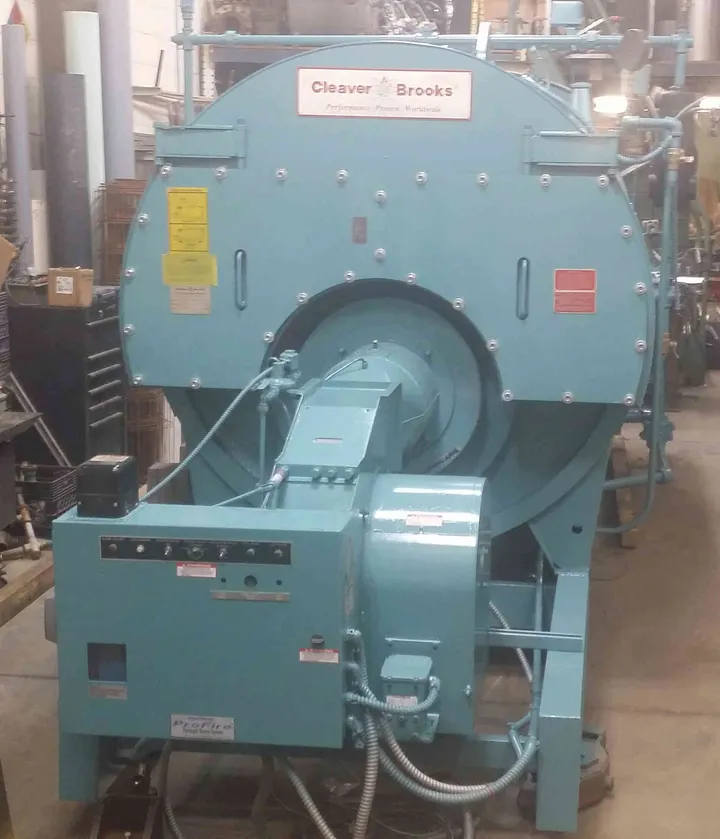
When a facility calls us for boiler service, they are usually looking for one of two things: a plant that is down now, or a plant they want to keep from going down. We handle both, with 24-hour emergency service backing up the scheduled work. Our technicians work on steam boiler service and hot water boiler service across a wide capacity range, from smaller packaged units in commercial buildings to large field erected boilers in industrial plants.
We are also an ASME R-Stamp repair shop, which matters if your inspector has flagged a pressure vessel issue that needs a certified fix, not a temporary patch.
Most of our work falls into a few categories: routine commercial boiler maintenance, emergency boiler troubleshooting, combustion tuning, and full teardown inspections ahead of insurance or state boiler inspections.
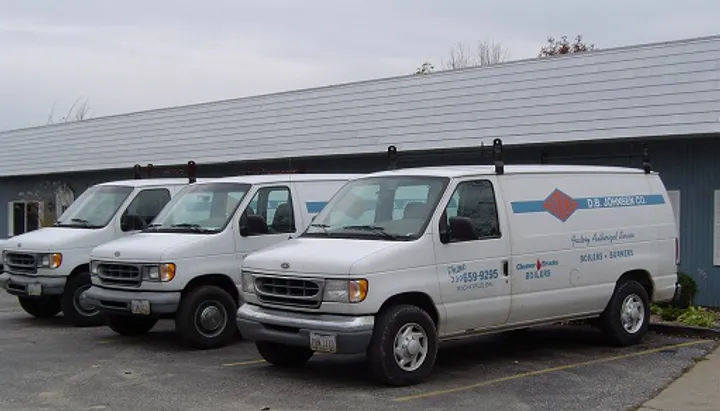
Five techs on the road
The crew that sells and starts up your boiler is the crew that keeps it running — on your site, on our trucks. 24/7 emergency service.
Request a quoteService on Any Make, Not Just the Lines We Sell
Most boiler rooms in Northern Ohio were not bought from one supplier. A firetube from the eighties sits next to a newer condensing unit, the burner came from somewhere else entirely, and the controls have been replaced twice. Being a manufacturer’s representative means our team knows a handful of lines intimately, including Cleaver-Brooks equipment we work on daily in our own shop, but the day-to-day industrial boiler service work covers whatever is actually installed.
That matters most when something is intermittent. A boiler that locks out once a week is a different problem than one that will not fire at all, and it usually gets solved by a technician who has seen that particular failure before rather than one swapping parts until it stops.
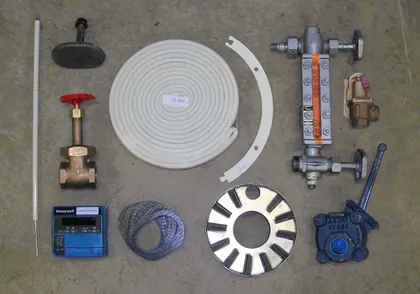
Our techs carry the common controls and safeguards on the truck, so boiler troubleshooting often turns into a same-visit repair.
Steam Boiler Service and Hot Water Boiler Service
Steam and hot water systems fail differently, and treating them the same way is how small problems become expensive ones. On steam systems, we watch water treatment closely. Untreated makeup water deposits scale on the tubes and corrodes steel from the inside, which is why chemical treatment and proper bottom and surface blowdown procedures come up in nearly every service visit we do.
On hot water systems, the concerns shift toward circulation, pump staging, and primary-secondary piping arrangements that were designed for a building load that may have changed significantly since installation.
Boiler Combustion Tune Ups and Efficiency Upgrades
The cheapest boiler work is the work you plan. A boiler combustion tune up sets the fuel-air ratio properly and shows up directly on the gas bill and in the stack numbers. For older equipment, we also handle boiler efficiency upgrade projects on controls and linkage that get more heat out of every therm of gas.
Both are far easier to schedule in a shoulder season than in January, and we book around your load rather than ours.
Boiler Cleaning Service, Inspection Prep, and Teardowns
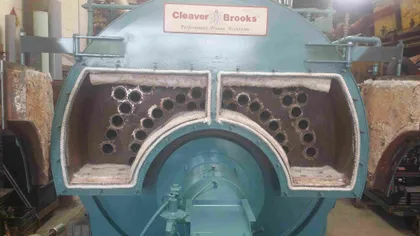
A fireside and waterside boiler cleaning service keeps tune up gains from quietly bleeding away as soot and scale build up, and like the tune up, it goes easier when it is scheduled around your season rather than forced by a breakdown. The same logic applies to commercial boiler inspection.
When the state or your insurance carrier is coming, we open the unit, document what is inside, prep it, and stand with you through the inspection itself, so any findings are things you already knew about.
If a teardown turns up a real problem, the repair crew is the same crew that did the inspection, and a rental boiler can bridge the gap if the unit has to stay offline while parts come in.
Boiler Maintenance Contracts
For facilities that would rather not think about any of this until we call them, we offer a boiler maintenance contract that puts combustion tuning, cleanings, and blowdown checks on a set schedule.
It is the same approach a lot of our longest standing customers have used for decades, because a boiler that gets consistent attention rarely becomes an emergency.
Why Facility Managers Choose D. B. Johnsen Co. for Boiler Service
Search “boiler service near me” in Northern Ohio and you will find plenty of options. What sets us apart is that we have been doing this specific work, on this specific equipment, in this specific region, since 1958, and our five factory-trained technicians are on the road daily, not answering from a call center in another state.
Our team is fully licensed and insured. One thing our techs mention often: the plants that call us least are the ones on a maintenance contract, not the ones with the newest boilers. Age matters less than attention.
If you search “boiler service near me” expecting a dispatcher who has never seen your equipment, our shop in Richfield is a different kind of call. Facilities in Cleveland, Akron, Canton, Youngstown, and Lorain are all inside comfortable driving distance, and our coverage runs across nineteen counties from there.
BOILER-ROOM FAQ
Frequently Asked Questions About Boiler Service
How often should a commercial boiler get serviced?
Most commercial and industrial boilers benefit from at least one full combustion tune up and inspection per year, with more frequent checks for high demand or older equipment.
What is a boiler horsepower (BHP)?
Boiler horsepower measures boiler output capacity. One BHP equals 33,475 BTU per hour for hot water or 34.5 pounds per hour for steam, rated “from and at 212°F.”
What is boiler blowdown in a steam boiler?
There are two types. Bottom blowdown removes heavy sludge, rust, and suspended solids from the bottom of the boiler and is typically done once a day. Surface blowdown uses a dip tube just below the water line to siphon off the top layer where impurities float, controlling the water’s total dissolved solids. It can run continuously or intermittently depending on the controls.
Why is chemical treatment required in a steam boiler?
Fresh makeup water carries dissolved minerals and gases. As that water is continually boiled, the minerals deposit on the tubes as scale and the gases attack the steel. Water softening and chemical treatment manage both problems before they cause damage.
Do you offer emergency boiler service?
Yes. We provide 24-hour emergency response for commercial and industrial customers and carry rental boilers and equipment for facilities that cannot afford downtime.
Schedule Boiler Service with D. B. Johnsen Co.
If your facility needs boiler service, whether it is a scheduled tune up or a boiler that went down overnight, contact D. B. Johnsen Co. Reach our team at (330) 659-9295 or sales@dbjohnsen.com to talk with someone who has serviced boilers across Cleveland, Akron, and Northern Ohio since 1958.
WHERE WE COVER
Boiler Service across Northern Ohio
Dispatched from our shop at 4900 Brecksville Road in Richfield, Ohio, covering nineteen counties. Start with your city:
LINES WE REPRESENT










Also representing: Century Controls.